Face Makeup
 Foundation
 Concealer
 -Face Powder
 Face Primer
 Makeup Fixer
 BB Cream
 Lip
 Lip Tint
 Lipstick
 Lip Sets
 Eye
 Mascara
 Eyeliner
 Eye Primer
 Eyeshadow
 Eyebrow
 Eyebrow Powder
 Eyebrow Pencil
 Eyebrow Mascara
 Eyebrow Sets
 Cheek
 Contour
 Blush
 Bronzer
 Makeup Tools & Brushes
 Makeup Brushes
 Eye Brushes
 Eyebrow Brushes
 Lip Brushes
 Makeup Sponges
 Makeup Brush Sets
 Makeup Tools


Melasma treatment starts with strict daily protection from sunlight and visible light, followed by well-studied topical ingredients such as azelaic acid, niacinamide and tranexamic acid. With help from a dermatologist for stubborn cases, melasma can be kept under control, but it is a chronic condition that can come back. If you have noticed symmetrical brown patches on your cheeks, forehead or upper lip that get darker every summer, you are not alone: this is one of the most common skin concerns among women in the Gulf.
This guide explains how melasma differs from sun spots and post-acne marks, why the sun and heat in Oman make it harder to manage, what you can do at home, when to stop and see a dermatologist, and how long results realistically take.
1. Melasma, sun spots or post-acne marks?
Many of us call every dark mark “pigmentation”, but telling them apart matters because each one is handled differently:
- Melasma: brown or grey-brown patches, usually with blurred edges, appearing symmetrically on the cheeks, forehead, nose and above the upper lip. It is linked to hormones, sunlight and visible light, and it tends to return.
- Sun spots (solar lentigines): small, well-defined spots on the most sun-exposed areas such as the face and the backs of the hands. They increase with age and accumulated sun exposure.
- Post-inflammatory marks: brown marks left where a pimple, scratch or irritation used to be. They follow the pattern of your breakouts rather than a symmetrical pattern, and they often fade with time and sun protection.
Tip: all three can appear on the same face, and an accurate diagnosis comes from a dermatologist. If a spot suddenly changes in shape, colour or size, it needs a medical check, not a new cream.
2. What causes melasma?
There is no single cause. Several factors work together in skin that is prone to it:
- Ultraviolet rays (UVA and UVB): the best-known trigger. They activate pigment cells and increase melanin production.
- Visible light: the light we can see, including blue light. Studies suggest it can trigger longer-lasting pigmentation in medium and darker skin tones, which are the most common in our region. A regular untinted sunscreen does not block it well.
- Heat: recent research lists heat among the factors linked to melasma, even without direct sun, for example standing near an oven or sitting in a hot car.
- Hormones: melasma often appears during pregnancy (it is sometimes called the “mask of pregnancy”) and is also linked to birth control pills and some hormonal treatments.
- Genetics: having a mother or sister with melasma raises your chances.
- Irritation: harsh products, aggressive exfoliation and random experiments can make pigmentation worse instead of better.
3. Why the sun in Oman and the Gulf makes melasma harder to treat
In Oman the UV index is high for most of the year and reaches very high levels in summer. Add temperatures above 40°C, coastal humidity in Muscat, Salalah and Sohar that makes sunscreen slide off with sweat, and strong light reflected from sand and pale buildings.
The result is that your skin faces all three triggers at once: UV, visible light and heat. That is why many women notice melasma fading a little in winter, then returning darker with the first heatwave. A short walk from the car to the mall, or sitting by the car window, is enough to bring pigmentation back, because long-wave UVA and visible light pass through glass.
4. Daily protection: the foundation of melasma treatment
No serum or cream for pigmentation will give the results you want if daily protection is not strict. These are the practical steps:
- Broad-spectrum sunscreen, SPF 50 if possible (never below 30) every morning, even at home or in the office.
- Enough product: about two finger-lengths for the face and neck.
- Reapply every two hours when you are outdoors, and after sweating or washing your face.
- Physical protection: a wide-brimmed hat, sunglasses, and shade during peak hours between 10 am and 4 pm.
- Avoid direct heat where you can, such as saunas and long steam sessions.
Why a tinted sunscreen matters for melasma
Tinted sunscreens containing iron oxides block part of the visible light that clear sunscreens miss. In one clinical trial, melasma patients who used an iron-oxide sunscreen alongside their treatment improved more than those using a UV-only sunscreen. Check the ingredient list for Iron Oxides, or the codes CI 77491, CI 77492 and CI 77499.
CeraVe Hydrating Mineral Sunscreen SPF 30 Sheer Tint: a mineral sunscreen tinted with iron oxides
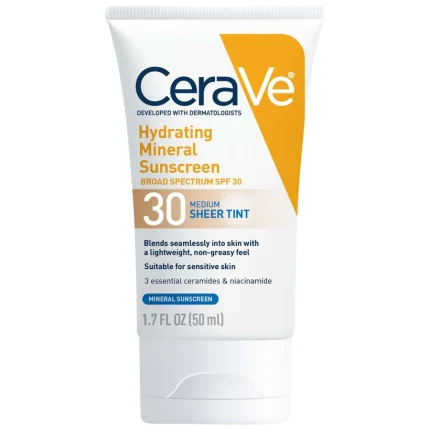
A mineral sunscreen with a light sheer tint, based on zinc oxide and titanium dioxide. It contains iron oxides, which give it its colour and may offer partial visible-light blocking, plus ceramides and niacinamide. About 6.99 OMR.
Caveat: it is SPF 30, so use enough and reapply. On days with long sun exposure you can layer it over a higher-SPF sunscreen.
Eucerin Sun Pigment Control Fluid SPF 50+: high protection with an anti-pigment ingredient
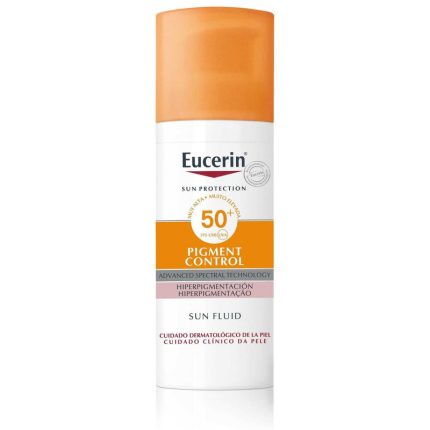
A lightweight fluid with high protection that combines broad-spectrum filters with Thiamidol, an ingredient designed for pigmentation, plus Licochalcone A, which the brand says helps fight free radicals from UV and high-energy visible light. A good fit if you prefer an untinted sunscreen with a light texture for the heat. About 7.88 OMR.
5. Well-studied topical ingredients for melasma
When you look for a melasma cream or serum, focus on the active ingredient rather than the brand name. These ingredients are commonly used for melasma without a prescription, and the strength of the evidence behind them varies:
| Ingredient | How it may help | Strength of evidence |
|---|---|---|
| Azelaic acid | Slows overactive pigment cells and calms inflammation | Good; the 20% medical strength has been compared with hydroquinone in studies |
| Niacinamide | Reduces pigment transfer to the skin surface and supports the barrier | Moderate, and gentle on most skin types |
| Topical tranexamic acid | Targets inflammatory and vascular pathways linked to melasma | Promising, but topical results vary |
| Vitamin C | An antioxidant that supports sunscreen and gradually evens tone | Moderate; best as a supporting step |
| Thiamidol | Inhibits the human tyrosinase enzyme | Encouraging studies, mostly funded by the manufacturer |
| Kojic acid | Inhibits tyrosinase | Limited; may cause irritation or allergy |
The idea is not to stack all of these together, but to choose one or two and stick with them alongside sunscreen. Too many actives irritate the skin, and irritation itself can deepen pigmentation.
ANUA Azelaic Acid 10+ Serum: for sensitive and combination skin
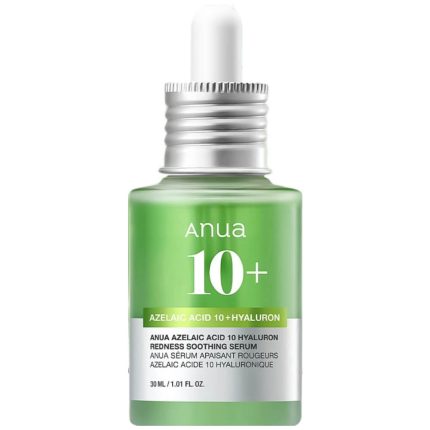
A serum with azelaic acid and hydrating ingredients, and a gentle way to start, especially if your skin tends towards redness or breakouts as well as pigmentation. About 7.35 OMR.
How to use: in the evening, or in the morning under sunscreen, on dry skin. Start every other day for the first two weeks.
ANUA Niacinamide 10% + TXA 4% Serum: two ingredients in one step

It combines niacinamide and tranexamic acid, which suits you if you want a simple one-step routine for pigmentation. About 5.99 OMR.
The Ordinary Niacinamide 10% + Zinc 1%: a budget option for oily skin

10% niacinamide with zinc, a good match for oily skin dealing with melasma and enlarged pores in coastal humidity. About 3.99 OMR.
Caveat: some sensitive skin may feel tingling or redness with this high strength, so patch test first.
CeraVe Skin Renewing Vitamin C Serum: antioxidant support in the morning
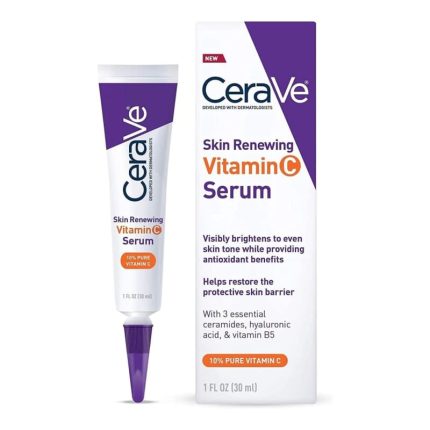
Vitamin C in the morning under sunscreen adds an antioxidant layer and gradually helps even out your tone. About 8.40 OMR.
Eucerin Anti-Pigment Dual Serum: with Thiamidol
A serum built on Thiamidol with hyaluronic acid. Thiamidol is one of the few non-prescription ingredients that has been studied specifically on melasma. About 15.23 OMR. Note that most of the studies were run by the manufacturer, and results vary from skin to skin.
Prices are approximate and may change, and delivery is available across the Sultanate of Oman.
6. When does melasma treatment need a dermatologist?
See a dermatologist if your patches have not improved after three months of consistent care, if they are widespread or deep in colour, or if you are not sure of the diagnosis. Some options are only used under medical supervision:
- Hydroquinone: one of the strongest topical treatments, but it is used on prescription and for limited periods, because long unsupervised use can cause irritation and, rarely, a blue-grey discolouration that is hard to treat.
- Prescription triple creams: combine hydroquinone, tretinoin and a mild steroid, used for short periods under follow-up.
- Oral tranexamic acid: a doctor may prescribe it for some cases after reviewing your health history; it is not suitable for everyone.
- Chemical peels: light, carefully chosen peels may help, while deep peels can increase pigmentation.
- Lasers: not a quick fix for melasma. Some types and settings can make melasma worse or cause post-inflammatory pigmentation, especially in medium and darker skin. Only have laser treatment with a dermatologist experienced in melasma.
Warning: avoid creams of unknown origin and “fast whitening” mixes. Some may contain strong steroids or mercury that are not listed on the pack and can cause more harm than the melasma itself.
7. Melasma during pregnancy and breastfeeding
Melasma is very common in pregnancy and often fades gradually after birth, though it may not disappear completely. During this time:
- Daily sunscreen, ideally a tinted mineral one, is the most important and safest step.
- Avoid hydroquinone, all retinoids and oral treatments unless your doctor decides otherwise.
- Azelaic acid, niacinamide and vitamin C are generally considered lower-concern options, while data on topical tranexamic acid and Thiamidol in pregnancy is limited.
- Check with your doctor or pharmacist before adding any new pigmentation product while pregnant or breastfeeding.
8. Realistic expectations
Melasma does not improve in a week. First changes usually show after eight to twelve weeks of daily sunscreen plus an active ingredient, and deeper melasma can take longer. Most importantly, melasma is chronic: it can return with strong sun exposure or hormonal changes, even after it has improved. The realistic goal is control, lightening and maintaining your results, not permanent removal.
Tip: take a photo of your face every four weeks in the same lighting, because slow change is hard to notice in the mirror day to day.
Melasma treatment FAQ
Does melasma go away permanently?
Melasma is a chronic condition that can be lightened and controlled with daily protection and the right treatment, but it can return with sun or hormonal changes, so prevention has to continue.
What is the best sunscreen for melasma in Oman?
A broad-spectrum sunscreen, SPF 50 if possible, ideally tinted with iron oxides to block part of the visible light, reapplied every two hours when you are outdoors.
Can I use niacinamide and azelaic acid together?
Yes, they are usually used together without problems, but start with one product and add the second after two weeks to make sure your skin tolerates it.
Is laser a good treatment for melasma?
It is not a first-line option, because some lasers can make melasma worse or cause new pigmentation, so a specialist dermatologist should decide after assessing your skin.
How long does melasma treatment take to show results?
First improvement usually appears after eight to twelve weeks of daily consistency, and deeper melasma can take longer with medical follow-up.
The practical takeaway
Melasma treatment in Oman’s climate starts with a daily tinted sunscreen and avoiding heat, then one or two well-studied ingredients such as azelaic acid or niacinamide with tranexamic acid, plus several months of patience, and a dermatologist visit if your case is stubborn or you are pregnant.
You can browse products for dark spots and pigmentation or the face brightening category, and choose your sunscreen from our sun protection page.