Face Makeup
 Foundation
 Concealer
 -Face Powder
 Face Primer
 Makeup Fixer
 BB Cream
 Lip
 Lip Tint
 Lipstick
 Lip Sets
 Eye
 Mascara
 Eyeliner
 Eye Primer
 Eyeshadow
 Eyebrow
 Eyebrow Powder
 Eyebrow Pencil
 Eyebrow Mascara
 Eyebrow Sets
 Cheek
 Contour
 Blush
 Bronzer
 Makeup Tools & Brushes
 Makeup Brushes
 Eye Brushes
 Eyebrow Brushes
 Lip Brushes
 Makeup Sponges
 Makeup Brush Sets
 Makeup Tools


How to know your skin type? Wash your face with a gentle cleanser and leave it bare for about 30 minutes: tightness usually means dry skin, shine all over means oily skin, shine only on the forehead and nose means combination skin, and neither means normal skin. You can confirm the result with the blotting-paper test, then take the free ToQueen skin quiz to get a suggested routine.
This guide covers both tests step by step, how to spot sensitive skin, how the climate in the Sultanate of Oman can skew the result, and what to do next.
What are the main skin types?
There are four main skin types: dry, normal, combination and oily, and the type is mainly determined by how much oil (sebum) your skin produces. Sensitive skin is a trait that can come with any of these types, so your skin can be oily and sensitive at the same time.
- Dry skin: produces little oil, so it feels tight and may show light flaking.
- Normal skin: balanced, with no obvious tightness and no bothersome shine.
- Combination skin: oily in the T-zone (forehead, nose and chin) and normal or dry on the cheeks.
- Oily skin: produces more oil, so the whole face looks shiny and pores look larger.
How can I find out my skin type at home? The bare-face test step by step
The bare-face test is the easiest way to find out your skin type at home: wash your face with a gentle cleanser, pat it dry, wait about 30 minutes without applying any product, then notice how your skin feels and looks. It is a common method mentioned by dermatologists and health sources such as Cleveland Clinic.
- Wash your face with a gentle, non-exfoliating cleanser and lukewarm, not hot, water.
- Pat your face dry with a clean towel without rubbing.
- Do not apply toner, serum, moisturizer or makeup.
- Wait about 30 minutes in a room at a comfortable temperature, away from direct air-conditioning.
- Move your face (smile and raise your eyebrows), then look in the mirror in natural light.
What does the result mean?
- Clear tightness when you smile, or some flaking: usually dry skin.
- Shine on the forehead, nose and cheeks: usually oily skin.
- Shine in the T-zone only, with normal or dry cheeks: usually combination skin.
- No tightness and no shine, skin feels comfortable: usually normal skin.
How do I use blotting paper to find my skin type?
The blotting-paper test is an at-home way to read your skin type from the amount of oil on the paper: wash your face with a gentle cleanser, wait about 30 minutes without any product, then press a clean sheet on your forehead, nose, cheeks and chin and hold it up to the light. The more oil you see, the oilier your skin.
- Wash your face with a gentle cleanser and wait about 30 minutes without any product.
- Use facial blotting paper.
- Press one sheet on your forehead and nose, a second on your cheeks and a third on your chin.
- Hold each sheet up to the light and compare them.
- Visible oil on every sheet: oily skin.
- Oil only on the forehead-and-nose sheet: combination skin.
- A very light trace from every area: normal skin.
- Almost no oil, with a tight feeling: dry skin.
Tip: do the two tests on different days; if they agree, you can trust the result more.
How do I know if my skin is sensitive?
Your skin is sensitive if it easily turns red, stings, itches or burns after new products, heat or friction. Oil tests cannot measure it, so watch how your skin reacts to products and conditions.
- Does your face flush quickly in the heat or after cleansing?
- Do you feel stinging or burning when you try a new product, even a gentle one?
- Does your skin react to fragrance or alcohol in products?
If you answered yes to more than one question, treat your skin as sensitive: use few products, preferably fragrance-free, and try every new product on a small area before putting it on your face.
The American Academy of Dermatology recommends applying a small amount to the inner arm or the bend of the elbow twice a day for 7 to 10 days; leave the product on for as long as you normally would, for a cleanser about 5 minutes. If no redness, itching or swelling appears, you can use it; if a reaction appears, wash the product off and stop using it. Note that some ingredients such as retinol and acids can cause mild, temporary irritation that is not necessarily an allergy. You can also browse the sensitivity and redness page.
Note: persistent redness, severe itching, swelling or flaking that does not improve is not just a “skin type” and may be a sign of a skin condition such as eczema or rosacea. In that case, see a dermatologist before trying new products.
Does the weather in Oman affect my skin type?
Yes, the weather in the Sultanate of Oman affects how your skin behaves day to day, but it does not change your basic skin type. Take the test in moderate conditions.
- Heat and coastal humidity (Muscat, Al Batinah, Sur): sweat and humidity can make normal skin look oily by the end of the day.
- Long hours of air-conditioning: conditioned air is dry and can make combination or normal skin feel tight.
- Hard water in some areas: can leave some skin feeling tight after washing, so do not judge your skin one minute after washing.
- Strong sun: affects every skin type, which is why sunscreen belongs in every routine, whatever your skin type.
If you are dealing with dryness and hard water, read the guide to hard water, hair loss and dry skin in Oman.
What mistakes make a skin type test inaccurate?
The most common mistake is testing after a harsh or exfoliating cleanser, after applying moisturizer, or right after coming in from the sun or out of an air-conditioned room.
- Using a harsh cleanser that strips the skin’s oil, so it looks dry when it is not.
- Judging your skin straight after washing instead of waiting about 30 minutes.
- Testing on days when you use exfoliants or strong actives such as retinol or acids.
- Relying on a single test, although skin changes with seasons and hormones.
I know my skin type. What should I do next?
Once you know your skin type, start with a basic three-step routine: a suitable cleanser, a suitable moisturizer and a broad-spectrum sunscreen with SPF 30 or higher in the morning.
For dry skin
Choose a gentle creamy cleanser, such as CeraVe Hydrating Facial Cleanser for Normal to Dry Skin, a richer moisturizer, and avoid hot water. The dry skin page gathers the products tagged for this concern.

For oily skin
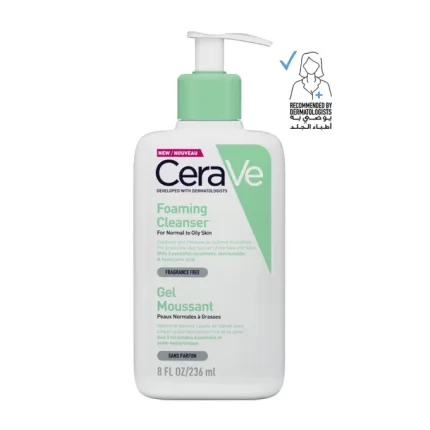
Use a gentle foaming cleanser, such as CeraVe Foaming Facial Cleanser for Normal to Oily Skin, and do not skip moisturizer; just choose a light, non-greasy texture. The oily skin page gathers the products tagged for this concern.
For combination skin
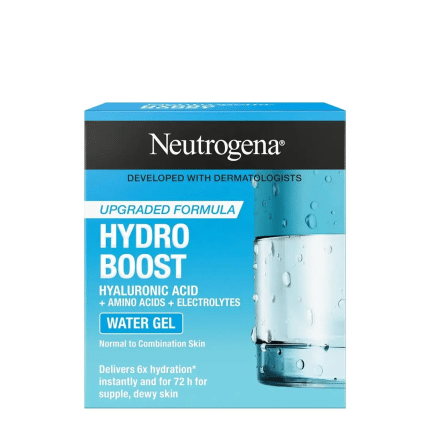
A light gel or lotion suits the T-zone without drying the cheeks, such as Neutrogena Hydro Boost Water Gel; add extra moisturizer to the cheeks if needed.
For normal skin
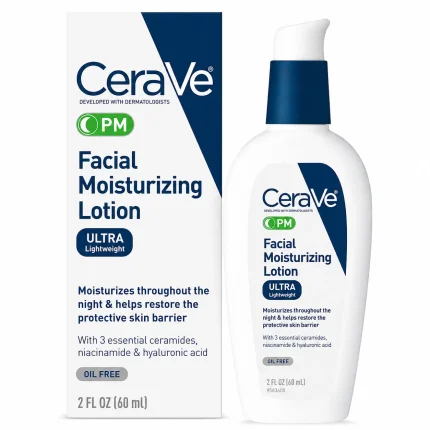
Keep the balance with a simple routine. You can use CeraVe PM Facial Moisturizing Lotion as a light evening moisturizer.
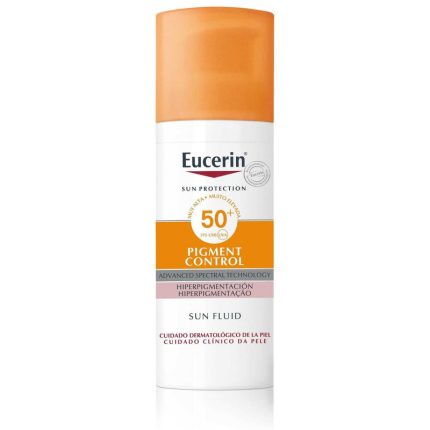
Sunscreen for everyone: under Oman’s strong sun, do not skip a broad-spectrum sunscreen every morning, and reapply during long sun exposure. One option is Eucerin Sun Pigment Control Fluid SPF 50+, especially if you have pigmentation. To choose a sunscreen by skin type, read the best sunscreen in Oman by skin type. You can browse more in the Face Moisturizer category and use filters such as brand and in stock only.
What is the free ToQueen skin quiz?
The ToQueen skin quiz is a free quiz on toqueen.com with 12 short questions that takes about two minutes and gives you your skin type, sensitivity level and main concern, then a morning and evening routine made of products in stock in the store. You can start it on the skin quiz page.
What does the quiz ask? How your skin feels an hour after washing, midday shine, pores, flaking, redness, reactions to new products, your top concerns, age, pregnancy or breastfeeding, experience with strong actives, steps per day and budget per product.
What do you get in the result?
- Your skin type: dry, normal, combination or oily.
- Your sensitivity level: low, medium or high, with your main and secondary concern.
- A morning routine, an evening routine and a weekly mask from in-stock ToQueen products, with a budget option and a premium option.
- A basic routine (cleanser, moisturizer and sunscreen) and a button to add the full routine to your cart.
If you are pregnant or breastfeeding: the quiz’s pregnancy mode excludes products containing ingredients usually avoided during pregnancy and breastfeeding, based on the recorded ingredients, and reminds you to check the label and ask your doctor before use. For severe acne, melasma or persistent redness, the quiz advises you to see a dermatologist.
The quiz covers facial skin only. You can also reach it from the Shop by Concern page, from product pages, or from the skin quiz shortcut in a Queen Bot chat, the ToQueen AI shopping assistant.
Frequently asked questions about finding your skin type
How do I know if my skin is combination?
Your skin is probably combination if the T-zone (forehead, nose and chin) turns shiny about 30 minutes after washing while your cheeks stay normal or tight. Blotting paper confirms it when oil shows only on the forehead-and-nose sheet.
Is sensitive skin a separate skin type?
No, sensitivity is a trait that can come with any skin type, so your skin can be oily and sensitive or dry and sensitive. Its signs are redness, stinging or itching that happen easily after products or in the heat.
Can my skin type change over time?
Your skin’s condition can change with age, hormones, seasons and pregnancy, becoming drier or oilier. That is why it helps to repeat the test from time to time, especially when the weather changes.
Where can I find the free ToQueen skin quiz?
You can find it at toqueen.com/en/skin-quiz, on the Shop by Concern page and on skincare product pages. You can also open it from the quiz shortcut in a Queen Bot chat.
Does the skin quiz replace a dermatologist?
No, the quiz helps you choose a daily care routine and does not diagnose skin conditions. For severe acne, melasma or persistent redness, it is best to see a dermatologist.
Summary: how to know your skin type with confidence
To know your skin type with confidence, do the bare-face test, confirm it with blotting paper on another day, and watch how your skin reacts to products to find out whether it is sensitive. Then start with the three basics: a gentle cleanser, a moisturizer with the right texture and sunscreen every morning.
If you want a shortcut, try the free ToQueen skin quiz to get a suggested routine from in-stock products, with delivery inside the Sultanate of Oman. For more options, browse the dry skin page and the Face Moisturizer category.