Face Makeup
 Foundation
 Concealer
 -Face Powder
 Face Primer
 Makeup Fixer
 BB Cream
 Lip
 Lip Tint
 Lipstick
 Lip Sets
 Eye
 Mascara
 Eyeliner
 Eye Primer
 Eyeshadow
 Eyebrow
 Eyebrow Powder
 Eyebrow Pencil
 Eyebrow Mascara
 Eyebrow Sets
 Cheek
 Contour
 Blush
 Bronzer
 Makeup Tools & Brushes
 Makeup Brushes
 Eye Brushes
 Eyebrow Brushes
 Lip Brushes
 Makeup Sponges
 Makeup Brush Sets
 Makeup Tools


The evidence that hard water causes hair loss is weak: studies link it more to dry, rough hair with mineral residue, and to dry, irritated skin in people prone to eczema, than to hair falling out from the root. So if your hair seems to be shedding more since you moved to a new home or a new area in Oman, the water may be a small part of the story, but it is rarely the only cause.
This guide to hard water hair loss in Oman explains what is actually known about tap water in Oman, what hard water does to hair and skin, which causes of hair loss are far more common and worth checking first, and a practical routine with products available at ToQueen. A short FAQ follows at the end.
1. What do we know about the water in Oman?
More than 85% of Oman’s drinking water comes from seawater desalination plants, according to figures published up to 2018, especially in Muscat and the coastal cities. Some inland areas and villages still rely partly on wells and groundwater, and some neighbourhoods use tanker water.
Water desalinated by reverse osmosis leaves the plant almost free of minerals, so a measured amount of minerals is added back (remineralisation) and the water is usually disinfected with chlorine before it reaches homes. As a result, desalinated mains water is generally relatively soft, not the “heavy” water many people assume.
Well and tanker water, on the other hand, can be much higher in calcium and magnesium, which makes it harder, and it varies from place to place. So there is no single answer for every home in Oman. The best way to judge your own water is to look for these signs:
- White spots on taps, glass and the shower head.
- Shampoo and soap that barely lather.
- A coated feeling on your hair after washing, however much you rinse.
- A simple hardness test strip, which is more reliable than guessing.
2. Hard water hair loss: what does the research say?
Studies on hard water and hair are few, and their results conflict:
- A small 2013 study on hair samples shed during combing by healthy volunteers found no clear difference in hair strength or elasticity between washing with hard water and with distilled water.
- A second study in 2018, on samples of men’s hair, used very hard water (much harder than what usually reaches homes) and found lower hair strength, which could make hair more prone to breakage.
- Both studies tested cut or shed hair in a lab. They looked at the hair shaft, not the follicle. Breakage is not the same as shedding from the root.
The honest takeaway: hard water can leave mineral deposits that make hair dull, rough and harder to comb, and that can increase breakage when you brush, which is easy to mistake for hair loss. There is no strong evidence that hard water on its own causes real shedding from the follicles or baldness.
What about chlorine? The chlorine used to disinfect mains water is present at low levels. It may add to a feeling of dryness for some people, especially with long, hot showers, but there is no evidence that it causes hair loss at these levels.
3. Hard water and dry skin
The evidence is somewhat clearer here than for hair. A British study published in 2018 found that hard water leaves more of a cleanser (such as sodium lauryl sulfate) on the skin after rinsing. This increased water loss from the skin and caused more irritation, especially in people with eczema. It was a small study, though, and an earlier trial in children with eczema found no clear improvement after water softeners were installed at home.
So hard water may be a contributing factor in dryness and itching, especially if your skin is sensitive or eczema-prone, but it is not the only one. In Oman, two other factors add to it: frequent showers because of the heat and sweat, and long hours in dry air-conditioned rooms.
4. The most common causes of hair loss in women
Losing about 50 to 100 hairs a day is normal. If you are clearly losing more, these causes are far more common than your water type and are worth checking first:
- Low iron or low iron stores (ferritin): common in women, especially with heavy periods or a diet low in iron.
- Low vitamin D: widespread in the Gulf despite the sunshine, because many women spend most of the day indoors.
- Thyroid problems: both an underactive and an overactive thyroid.
- Postpartum shedding: usually starts a few months after giving birth and often improves with time.
- Severe stress, illness or crash dieting: the effect on hair can show up two to three months later.
- Constant pulling: tight ponytails, tight styles under a hijab and extensions can cause shedding along the hairline.
- Hereditary (female-pattern) hair loss: shows as gradual thinning over the middle of the scalp.
Note: see a dermatologist or your doctor if the shedding is sudden and heavy, if bald patches appear, if it comes with redness, pain or scaling on the scalp, if you also have fatigue, palpitations or weight changes, or if it lasts longer than three months. Simple blood tests (iron, ferritin, vitamin D and thyroid) may reveal the real cause. Do not start iron or other supplements without medical advice, especially during pregnancy or breastfeeding.
5. A practical routine for water-related hair and skin dryness
These steps aim to reduce residue and dryness, and they help whether your home water is hard or desalinated and chlorinated.
Step 1: A gentle shampoo for regular washing
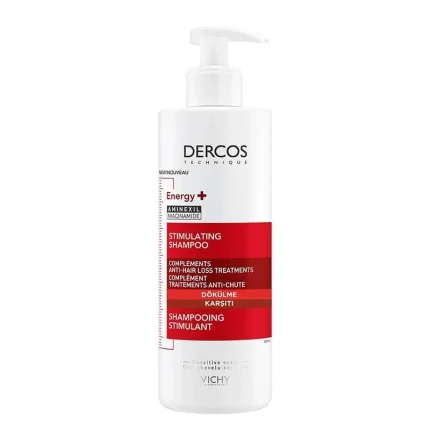
Choose a shampoo that suits your scalp. If your scalp is dry and itchy, Eucerin DermoCapillaire Soothing Shampoo 5% Urea (about 7.50 OMR) contains urea, known for helping to hydrate dry skin. If weak, shedding hair is your main concern, Vichy Dercos Energising Stimulating Shampoo (about 7.14 OMR) contains Aminexil and is commonly used in routines for weak hair. Keep in mind that a shampoo alone will not fix an internal cause such as low iron.

Step 2: A clarifying shampoo once every one to two weeks
A clarifying shampoo, or one with chelating ingredients such as EDTA or citric acid, can help remove mineral deposits and styling product build-up. Do not use it more often than that, because overuse can dry out your hair.
A gentler way to clear build-up from the scalp is a scrub such as Jardin d’Oleane Detox Scalp Scrub (about 2.63 OMR), once a week on a damp scalp with light circular movements. Caution: avoid scrubs if your scalp has cuts or inflammation.

Step 3: Conditioner after every wash
Conditioner coats the hair shaft and reduces friction and tangling, so there is less of the breakage that gets mistaken for hair loss. Cantu Guava Scalp Relief Conditioner (about 2.63 OMR) is an affordable option for dry hair. Apply it more to the lengths than the roots, leave it for two minutes, then rinse.

Tip: finish with a lukewarm or cool rinse, and do not rub your hair with a towel. Press it gently, then detangle with a wide-tooth comb, starting from the ends and working up.
Step 4: Lukewarm water, not hot
Hot water strips natural oils from the skin and scalp faster and makes dryness and itching worse. Keep showers lukewarm and as short as you can, even in winter.
Step 5: Moisturise within minutes of showering
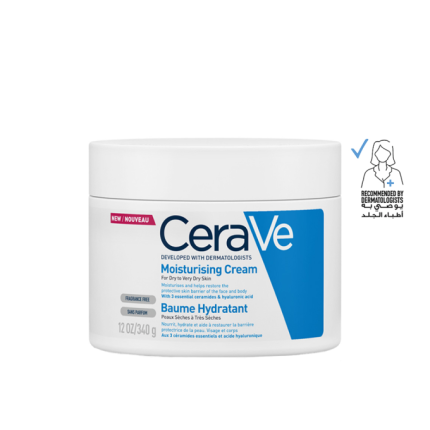
Apply moisturiser while your skin is still slightly damp to lock the water in. CeraVe Moisturizing Cream (about 6.30 OMR) contains ceramides and hyaluronic acid and suits both face and body. If itching bothers you most, Eucerin Skin Calming Lotion (about 6.83 OMR) is a good body option after showering. You can find more on the dry skin solutions page.

Prices are approximate and may change.
6. Shower filters: what they can and cannot do
| Type | What it may do | What it does not do |
|---|---|---|
| Carbon or vitamin C shower filter | Reduces chlorine and its smell, and may make the water feel nicer | Does not remove much calcium or magnesium, so it does not turn hard water into soft water |
| Ion-exchange water softener (whole house) | Actually reduces water hardness and limescale | Does not treat hair loss from internal causes, and costs more to buy and maintain |
If your home gets desalinated mains water, a chlorine filter may be enough for your comfort. If your water comes from a well or tanker and the white spots are obvious, a regular clarifying wash and a good conditioner matter more than a filter that does not change hardness. And do not expect any filter on its own to stop hair loss.
Frequently asked questions about hard water and hair loss
Does hard water cause hair loss?
There is no strong evidence that hard water alone causes hair to fall out from the root. It can make hair drier and easier to break, so if shedding increases, it is worth checking other causes such as low iron or thyroid problems.
Is tap water in Oman hard?
Desalinated mains water is generally relatively soft, because desalination removes most minerals and only a measured amount is added back. Well and tanker water can be harder, and this varies from area to area.
Will a shower filter stop hair loss?
Most shower filters reduce chlorine but remove little of the minerals that make water hard, and there is no evidence that they stop shedding. They may only make the water feel softer.
How often should I use a clarifying shampoo?
Usually once every one to two weeks, followed by a moisturising conditioner. Using it more often can dry out your hair and scalp.
When should I see a doctor about hair loss?
If the shedding is sudden and heavy, bald patches appear, it lasts longer than three months, or it comes with symptoms such as fatigue or weight changes. Simple blood tests may reveal the real cause.
The practical takeaway
The water in your home can affect how your hair feels and how dry your skin gets, but it is rarely the real reason behind hair loss. Start with the basics: lukewarm water, a shampoo that suits your scalp, a regular clarifying wash, conditioner after every wash, and moisturiser on damp skin. If the shedding continues, a doctor’s blood tests are a better next step than switching products every week.
Browse ToQueen’s hair loss solutions and the hair care range, with delivery across Oman.